Welcome Our Company!


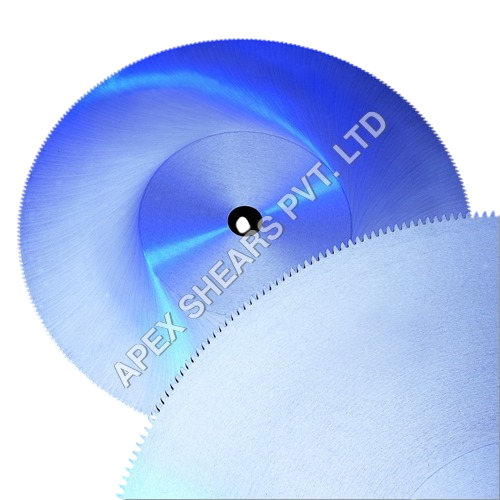
The Friction Circular Saw Blades are strong industrial cutting tools designed to operate at a high cutting speed of metal sections through the principle of frictional heating in lieu of normal toothed cutting. These blades find extensive application in the steel mills, rolling plants, pipe mills and heavy fabrication units where the solid and hollow metal profiles have to be cut rapidly and continuously. Friction Circular Saw Blades are designed to run at extremely high rotational rates providing quick, consistent as well as dependable cutting capability even in extreme working situations.
These blades are manufactured in the best quality alloy steels with the state of art metallurgical methods to endure high heat production, heavy mechanical loads and extended working schedules. Their high construction and balancing make them stable and have less vibration and also cut uniformly. Friction Circular Saw Blades have been appreciated for their durability, efficiency and resistance to handle tough industrial workload with minimum interference.
An Overview and Industrial Use of Friction Circular Saw Blades
Friction Circular Saw Blades are mostly applied in cutting ferrous metals that include mild steel, carbon steel, structural sections, and tubes, pipes, rails, and bars. Rather than the traditional saw blades that are cut with high speed by friction to ease the metal at the cutting edge to make a clean cut, they use friction heat to soften the metal at the cutting edge to make a clean cut at high speeds. This renders them particularly appropriate in mass production settings where speed and throughput is very vital.
These blades are widely used in cutting of hot and cold steel, milling of tubes and pipes, billet cutting line, forging line, and the metal processing plants. They can be used with the high-speed friction saw machine and automated cutting systems. The fact that they are able to cut thick-walled sections and large cross-sections in a steady manner in any industrial set up makes them a necessary tool in heavy-duty systems.
Advanced Alloy Steel Material Composition
The Friction Circular Saw Blades are produced through the alloy steels that are carefully selected and known to be highly strong, stable in temperature, and have a high tendency to resist deformation. Material composition is also designed to withstand extreme temperature produced during cutting on the hardest metals and at the same time, retains the structural integrity of the blade throughout the working life.
The blades have a perfect combination of hardness and toughness, which is observed through controlled heat and stress relieving processes. This guarantees cracking, warping and early wear resistance. The unidirectional microstructure of the steel also improves the stability of blades at the high RPMs, which makes the operation safer and the blade has a long life in continuous cutting operations.
Precision Engineering for High-Speed Performance
The Friction Circular Saw Blades are all machined to the exact dimension, flatness, and concentricity. Balancing is a very important feature of the design and any slight imbalance can impact the performance even in the high rotational speeds. Dynamically balanced blades help minimize the machine stress and vibration, as well as produce a smooth cut.
The cutting edge profile is designed in such a way that it maximizes the frictional efficiency but also has controlled heat distribution. This will lead to regular cuts having little burr and less distortion of the materials. The blades have been developed to ensure that they work consistently under a wide range of material thickness and cutting conditions and have become a reliable choice when it comes to high volume production lines.
Constructed with Strength and Serviceability
Friction Circular Saw Blades are designed in accordance with the tough requirements of industrial environments where the time lost translates directly to productivity. Their robust toothless shape removes any possibility of tooth fracture and thus they are very dependable when it comes to heavy loads and frequent employment. Even repeated thermal cycles do not alter the shape and cutting efficacy of the blades.
The high service life of these blades means that they require less replacement as well as less operating cost. The operators enjoy the advantage of having a constant cutting quality, higher efficiency of machines, and safer working environments. They are well constructed and hence reliable in the automated cutting systems as well as manual cutting systems.
Production Process and Quality Control
The production of Friction Circular Saw Blades is done on a high quality standard throughout the process. It starts with the process of certified raw material selection, and then forging or blank preparation. Fine machining processes are employed in order to attain fine tolerances, smooth finishes, and precise bore sizes.
Heat treatment is done under the controlled conditions to increase thermal resistance and mechanical strength. Treatment processes involve post-treatment processes which involve grinding, surface finishing, and dynamic balancing. The blades are subjected to a strict inspection and are checked in terms of dimensions, hardness, balance check, and visual inspection. This total quality control guarantees that all the blades produced are of the industry standard in terms of performance, safety, and durability.
What is the purpose of Friction Circular Saw Blades?
They are used for high-speed cutting of ferrous metals such as steel pipes, tubes, bars, rails, and structural sections in industrial metal processing applications.
Is it possible to use Friction Circular Saw Blades when performing long term operations?
Yes, they are specially made to be used in continuous and high-volume cutting processes and provide stable operation and high life cycle.
Are these blades supposed to be maintained frequently?
There are low maintenance needs. When machines are properly aligned, operating speed is correct and a regular check is beneficial to obtain maximum life and performance of blades.
Are Friction Circular Saw Blades personalizable?
Yes, blades can be produced to specific machine needs and customized cutting applications in specific standards of diameter, thickness, and bore size.
What factors affect the life of a Friction Circular Saw Blade?
The life of the blade is determined by the speed of operation, the material used, the pressure used in cutting, the cooling habits and the general condition of the machine.
What industries are known to use Friction Circular Saw Blades?
They are popularly applied in steel plants, rolling mills, tube and pipe mills, forging units, fabrication workshops as well as heavy engineering.

Price:
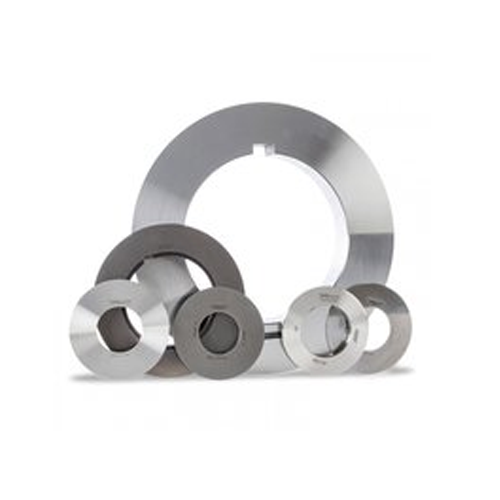
Price 5000 INR / Set
Minimum Order Quantity : 1 Set
Usage : Industrial
Color : Silver
Product Type : SLITTING CUTTERS
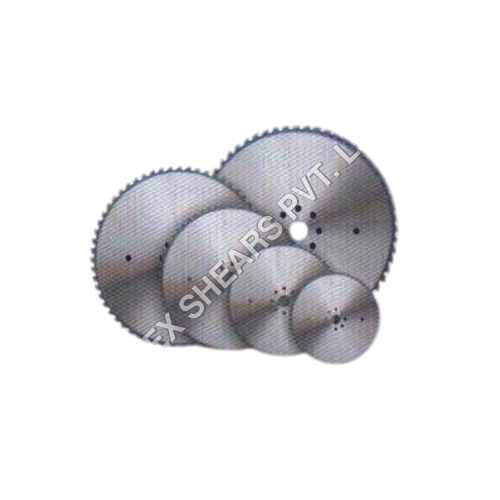
Price Range 1200.00 - 12000.00 INR / Set
Minimum Order Quantity : 1 Set
Usage : Industrial
Color : Silver
Product Type : TCT Saw
Dehradun, Uttarakhand, India





 Send Inquiry

 Send Inquiry
 Send Inquiry
 Send SMS